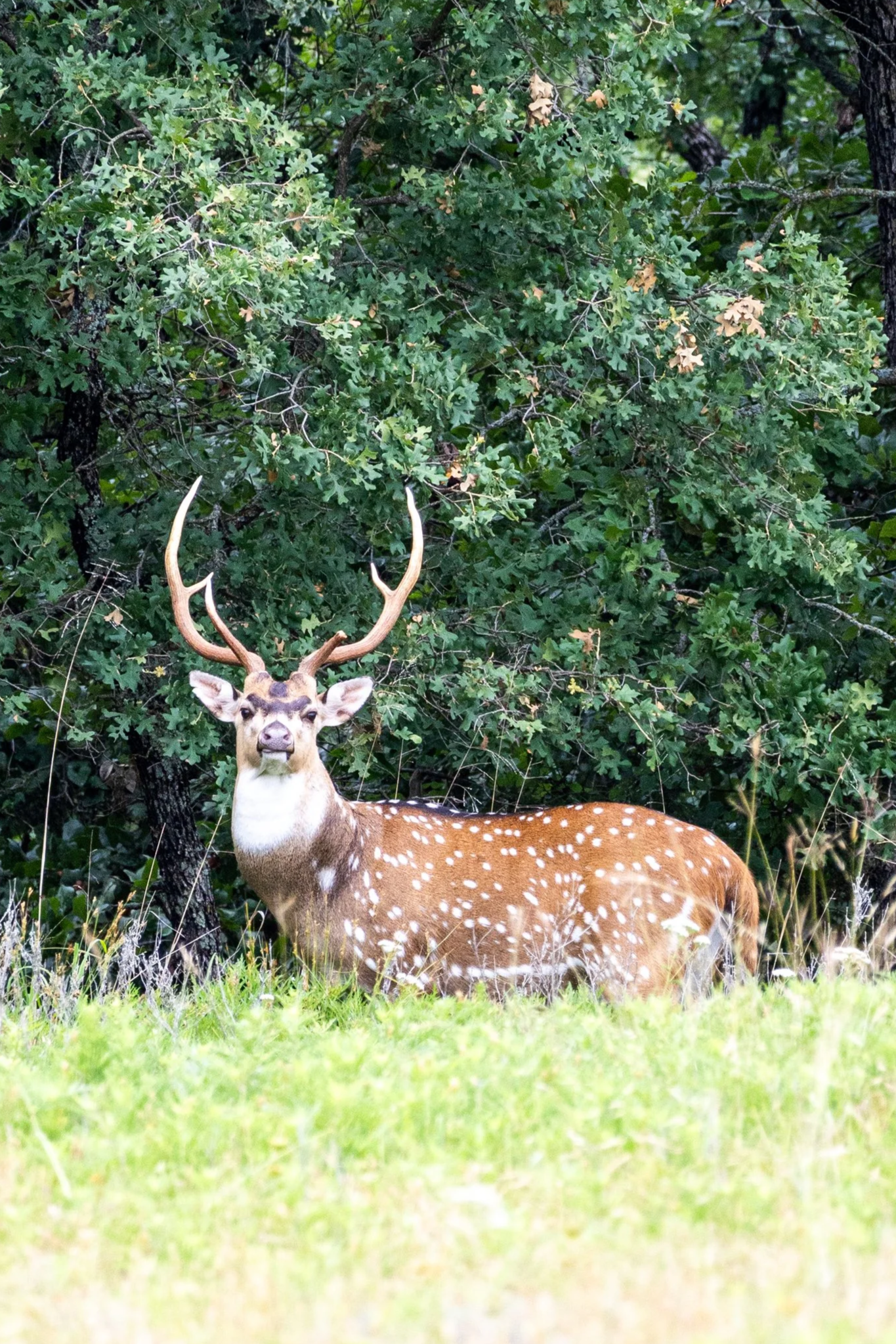
Axis
Axis are graceful, adaptable deer native to the Indian subcontinent and parts of Southeast Asia, bearing a more spotted, slender appearance than red deer yet sharing many ecological traits: males grow antlers used in autumn sparring for dominance while females typically lack large antlers; size varies by region and subspecies from lighter, deer-like builds to more robust forms; coats shift with the seasons—prominent spots and a tawny summer hue fading to a duller winter tone—providing camouflage across grasslands, forests, and marshy terrain; they are social, with females and young forming matriarchal groups while older males may be solitary or form bachelor bands outside the breeding season; primarily grazers and browsers, axis feed on grasses, shrubs, and young shoots and will travel to find forage; during the rut, males vocalize, display antler clashes, and attempt to gather and defend receptive females.
Key Facts
Male axis deer typically weigh ranging from about 110 to 170 pounds (50–77 kg), though larger individuals can approach 200 pounds (90 kg). Females are lighter still, usually between 70 and 120 pounds (32–55 kg). Gestation for axis deer lasts around 7 to 7.5 months, roughly 210 to 230 days, and fawns are able to stand and nurse within minutes of birth—an essential survival trait in the wild. Females reach sexual maturity at about 1 to 1.5 years, while males generally begin breeding successfully from 2 to 3 years onward once they have developed sufficient size and antler growth to compete. In the wild, axis deer commonly live about 8–12 years, though individuals in protected or managed conditions can live into their early to mid-teens.
Price :
No hunts available for 2026
Other available hunts.